
Mindfully Prepared Birth - Why would I choose to become a childbirth educator?
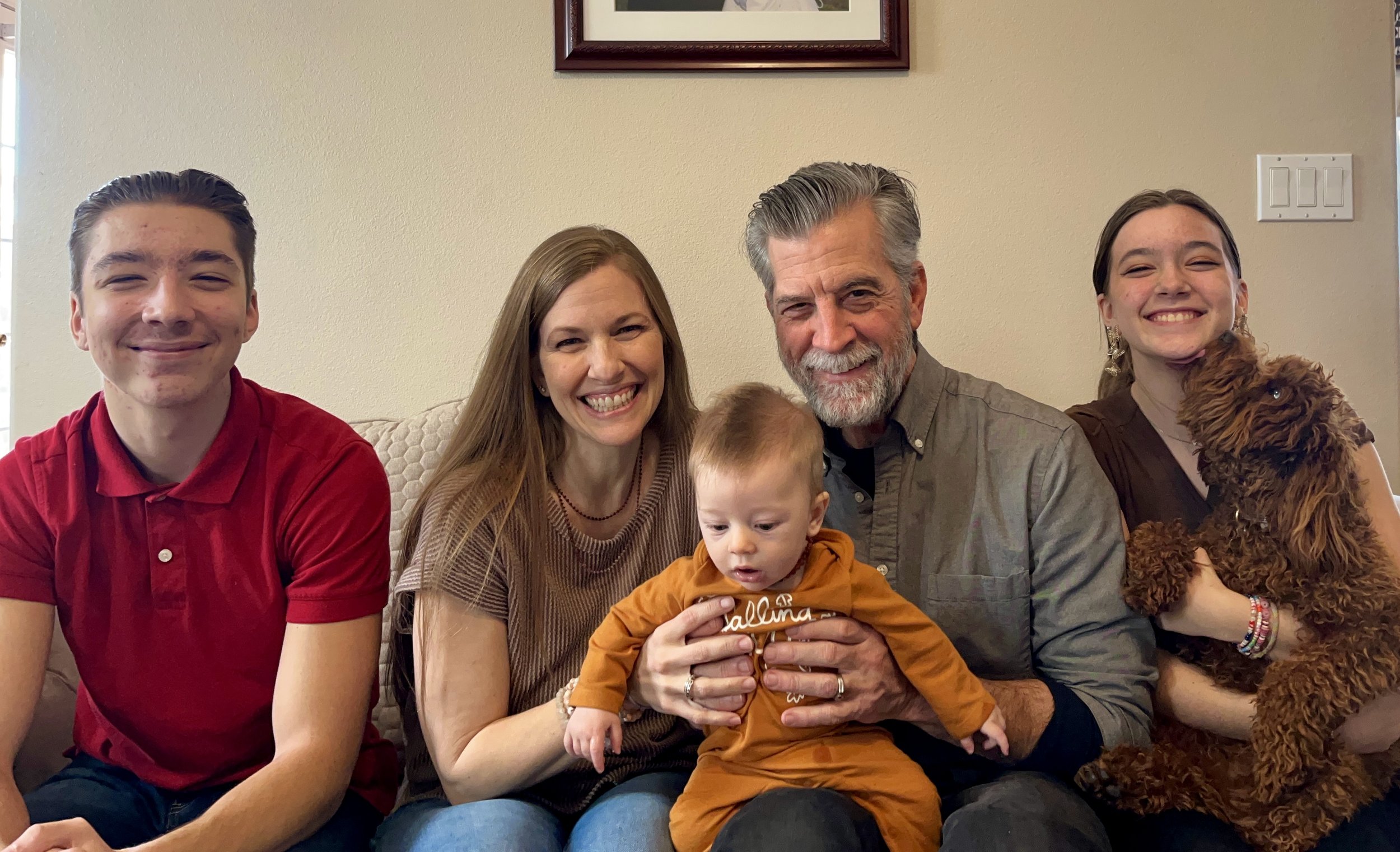
By Barbara D’Antonio
Education made all the difference for me. My name is Barbara D’Antonio and I’m so excited to join Kelly Colvin and Peaceful Birth Choices to offer the best information available to expectant parents.
This program is what I wish I’d had when I was expecting my first baby. Every pregnancy, I learned a little more. Every birth got better and better. There is something so powerful in knowing, a deep sense of peace that comes from trusting your body, your intuition, and the miraculous process that brings us all earth-side.
I left teaching kindergarten after 16 years in order to homeschool my own children as they were reaching the middle school years. I began my health and wellness journey, training as a functional nutrition counselor and a yoga instructor. I’d never felt more fulfilled, never been healthier or happier. And then, I got pregnant. At 40!! 😳
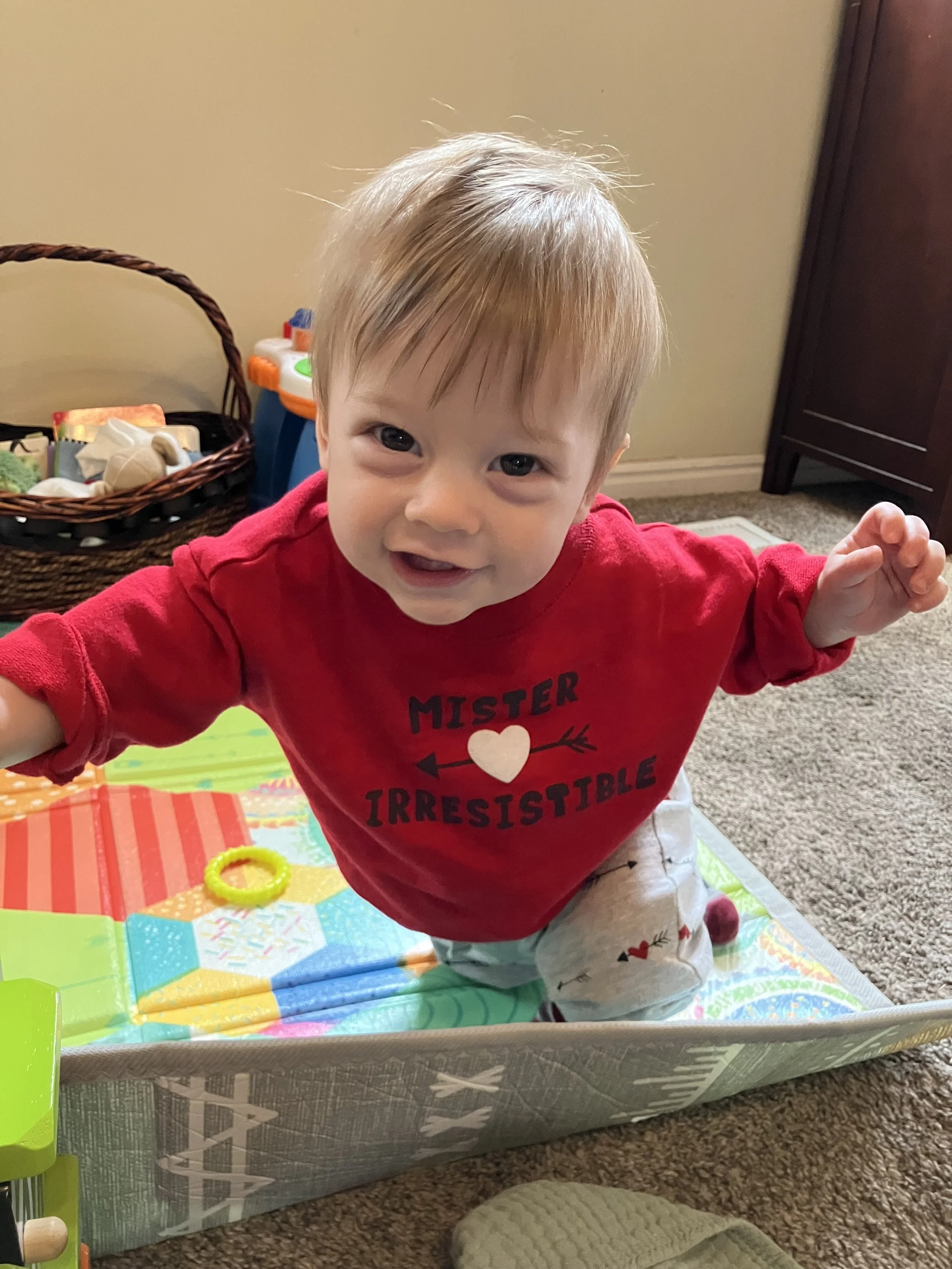
Honestly, in this new phase of life, I couldn’t be more excited to welcome another person into our family. I’d never felt more prepared, knowledgeable, ready! With my older children I had learned so much about natural childbirth and always sought to create the healthiest start for my babies. I had experienced hospital and home birth, OB- and Midwife-attended, taken different styles of classes, read so many different books, and been a part of mama groups that supported me on my journey. I had strengthened my body inside and out. Everything led me to this moment, to this baby. I assembled the team of my dreams. My husband had been on his own journey throughout these years and he was ready to be the support for me that he’d always aspired to be. We refreshed our birth education with Kelly and her Mindfully Prepared Birth program - what an amazing way to bring it all together! And we had the BIRTH OF OUR DREAMS. So much healing, what a reclamation, a remembering of all that is sacred and right about birth. I began this chapter of motherhood from a place of empowerment, fully supported by experienced, like-minded mothers, and my amazing partner.
This precious bonus baby of ours, so healthy and vibrant, is our reminder every day of the power of education. I can’t wait to share it all with you.
With love,
Barbara

Dakota's Home Birth
Dakota’s birth was immensely evolutionary and evocative. I birthed her into this world the way Mother Nature intended. No drugs. No bright lights. No institution. Peacefully. Intimately. Safely.
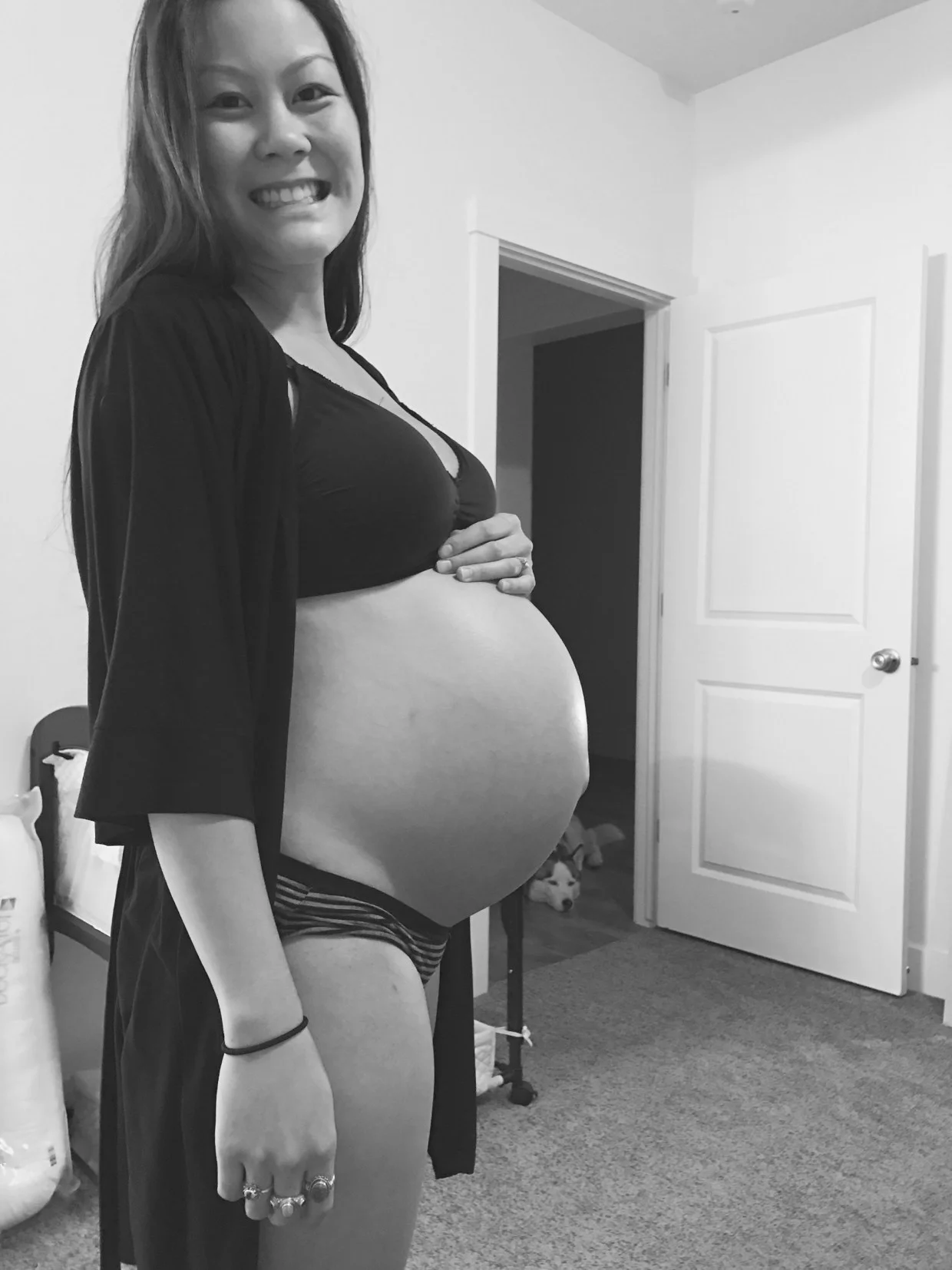
Dakota’s birth was immensely evolutionary and evocative. I birthed her into this world the way Mother Nature intended. No drugs. No bright lights. No institution. Peacefully. Intimately. Safely. This is my sacred rite of passage. This is my natural birth story.
Please note: I used Hypnobabies hypnobirthing techniques. I’ve been taught to use different vocabulary without negative connotation – “pressure waves” refers to contractions, and “birthing time” refers to labor.
I was 9 days past my “guess date”, so I went to see my midwife Liz at 11am on October 27, 2017 to get my progress checked. I was 3cm dilated, which surprised me because I hadn’t felt any pressure waves, only mild menstrual-like cramping. Knowing that my birthing time was near, I went home and practiced my hypnosis techniques.
At 4:15pm, I awoke from a deep hypnosis. As I got out of bed, fluids came rushing out. I wasn’t sure if I had peed all over myself, or if my water broke! I went to the bathroom and checked to see what happened down there – it was definitely the latter. I immediately called my Liz and told her what happened.
Click HERE to read the rest of Stephanie's beautifully written birth story and follow her for delicious, healthy recipes, and holistic living tips.

Creative Ways to Pay for Non Conventional Birth Care
There are many non conventional options regarding pregnancy, birth and postpartum care. These often are not related to physician or hospital care. These options may or may not be covered by your insurance. Things such as prenatal and postpartum massage, chiropractic care, birth doula support, placenta encapsulation, acupuncturist care the list can go on. The first step in determining what care you would like to receive would be to research the many options.
We'd like to thank Stacey Davis of Your Birth Time for sharing this blog post with us. Stacey is a doula, placenta encapsulation specialist, and postpartum wellness coach.

There are many non conventional options regarding pregnancy, birth and postpartum care. These often are not related to physician or hospital care. These options may or may not be covered by your insurance. Things such as prenatal and postpartum massage, chiropractic care, birth doula support, placenta encapsulation, acupuncturist care the list can go on. The first step in determining what care you would like to receive would be to research the many options. Using research and your own self history can help you decide what non conventional care you would like during your pregnancy, birth and postpartum. Once you have decided what you want to implement in the care you receive then decide how you are going to pay for it. Here are five creative ways to pay for those services:
1. Skip that treat, pocket the change. We all have that one treat we allow ourselves which may not be the best for our baby while we are pregnant or even breastfeeding. You know that Starbucks indulgence or bag of kisses stuffed in your top drawer. Skipping your daily Starbucks for one month could save you about $100!
2. Barter or trade for partial services. Many non conventional birth workers will barter or trade for part of the services they offer. Do you have a special talent or does your husband, mom, dad or brother run a local business that would benefit your birth worker? Work out a trade. You could even offer to babysit or prepare meals for your birth worker when they are called to a birth or to assist a pregnant or postpartum mom.
3. Create a registry for your birth services. Twenty dollars from ten of your close friends or family members comes up to $200. This could definitely help you pay for the birth services that you would like. Let’s face it, several of these family and friends would contribute much more than $20! Call your birth worker and ask them to work with you to come up with a registry for their services.
4. Birthday, Christmas or baby gifts ask for cash in place of gifts. Gift cards are also another great option. Many birth workers are willing to work with you to create gift cards or gift certificates. I know that asking friends and family for money instead of gifts can be a little uncomfortable. When you explain what it is for they will understand and be more than willing to accommodate.
5. Check with your insurance, cafeteria plan or HSA. Yes many moms have gotten their insurance, cafeteria or HSA to cover these services, even doula care and some portion of home birth services. Talk with your local birth provider she will be the most familiar with how to arrange this for your area.

7 Reasons Why You Need a Doula
Doulas are awesome. Plain and simple. These incredible women provide invaluable service to mothers around the world. A more natural birth experience is on the rise and for good reason. Check out these seven reasons why you need a doula!
We'd like to thank Amy from Pink Stork Solutions for allowing us to share her article on our blog.

Doulas are awesome. Plain and simple. These incredible women provide invaluable service to mothers around the world. A more natural birth experience is on the rise and for good reason. Check out these seven reasons why you need a doula!
Women with doulas are less likely to have C-Sections
Who wants a C-section? C-sections are expensive, intensive, and result in a long recovery time. This major surgery is on the rise throughout the US, despite the advances in technology and medical knowledge regarding birthing. In a review of studies published from 1968 to 2012, researchers from the Agency for Healthcare Research and Quality found significant data supporting the reduction of cesarean sections in women who used doulas during labor. In three studies, doula support in labor was associated between a 5%-22% reduction in C-sections. Another study found a reduction of 20.6%, and yet another found a reduction of 34.2%! Any way you slice it, having a doula improves your chances of delivering your baby naturally.
Doulas save you money!
In an age of ever-rising medical costs, a study published by the Wisconsin Medical Journal, found an estimated $29 million dollars could have been achieved for every low-risk birth were attended in-hospital by a professional doula! An estimated cost savings of $424 per delivery or $530 dollars per low-risk delivery.
Birth is expensive enough! Doulas actually save you money! Choosing to work with a doula is an investment, but one that rewards handsomely.
Doulas reduce labor time and result in fewer medical interventions
A study published in 2005 shows that the presence of a doula during labor resulted in fewer epidurals and shorter labor time. The study supports the role of the doula in the birthing process and encourages institutional changes to provide doula support to laboring women.
Doulas reduce rates of tears and deliveries via instruments
Doulas provide focused labor support to laboring mothers. Women who received doula support were 41% less likely to give birth with vacuum extraction or forceps and 25% less likely to experience painful tearing of the vagina and proximal muscle and skin structures. A less painful birth and quicker recovery were associated with doula support.
Doulas result in more personal support from the fathers-to-be
Doulas allow fathers-to-be to support their partners physically and emotionally while doulas assist the mother during the labor process. This way, the partner can provide the personal support mothers so desperately need while having their birthing needs tended to by a certified professional. This study showed that the fathers remained further away from the mothers than doulas and talked and touched less. The father provided far more personal support while the doula resulted in significant benefits in outcome.
Women who use doulas report greater self-esteem, less depression, and a higher regard for the babies compared to women who don’t use doulas
At 6 weeks after delivery a greater proportion of doula-supported women were breastfeeding, reported greater self-esteem, less depression and a higher regard for their babies. Furthermore, doula-supported women held a much higher regard for their ability to care for their babies compared to the control mothers who opted for no doula support during birth.
Doula-assisted mothers are four-times less likely to have a low birth weight baby
In this study published in 2013, doula-assisted mothers were four times less likely to have a low birth weight baby, two times less likely to experience a birth complication, and significantly more likely to initiate breastfeeding. The study suggests communication and encouragement from the doula increased the mother’s self-esteem regarding her ability to impact her own pregnancy outcomes.
Convinced yet? Check out our directory of doulas and midwives here and find someone local to help you during your pregnancy journey!
A childbirth without meds, absent pain?
Lisa Larson from The Spectrum interviewed me about Hypnobabies back in November. What a fun experience! Hypnosis for birth is gaining interest as more women and their birth care providers see how well it works. You can see the entire interview HERE.
If you watch any movie or television show depicting a woman delivering a baby, the scene is always, as you might expect, a little dramatic. And while anyone who has been through the actual process will likely agree that those scenes are a little off the mark, the consensus among most women seems to be that, yes, childbirth is hard work and, when un-medicated, incredibly painful.
However, based on her own experiences, Kelly Colvin of Washington Fields says it doesn't have to be.
After delivering two children in the hospital with an epidural and not being pleased with her experience, Colvin started looking for alternative methods when it came time to have her third child. What she found is a trademarked version of hypnobirthing known as Hypnobabies and the concept just made sense.
Practicing medical grade hypnosis techniques, Colvin says Hypnobabies teaches its participants to tap into the deepest level of hypnosis that is, "ideal for giving birth."
Colvin is quick to point out that the laboring woman is not asleep — a common misconception when it comes to hypnosis — but instead is fully functional and able to communicate. The difference is, she has placed herself in a deep level of hypnosis that allows her body to do what it was designed to do without fear and anxiety impeding the process.
"All hypnosis is self-hypnosis," says Colvin, a certified Hypnobabies instructor, as well as a Hypnobabies doula. "No one is controlling you."
To the skeptics out there, Colvin says the average person is in a state of hypnosis several times a day without realizing it – while driving, while watching television or staring at a computer.
"Anytime you are concentrating deeply on anything, that's a form of hypnosis," she says.
"The key with Hypnobabies and hypnobirthing, is to control that concentration and reprogram the mind that childbirth does not have to be a painful experience.
Although Hypnobabies does not guarantee a pain free labor and delivery, Colvin says the goal is to have, "the most comfortable birth for you and your baby" as well as "the safest birth experience."
Colvin herself utilized the Hypnobabies techniques with her third and fourth children, delivering in a birth center with the third and at home for her fourth, but she has acted as a Hypnobabies doula on many occasions for women delivering in the hospital as well. For her, the difference in her birth experience from the first two children to the latter two was amazing and she couldn't wait to tell other people about what she had experienced.
"In our culture we view (birth) as this horrific, painful experience but when you educate and prepare yourself it is so much different," Colvin says.
A six-week class, along with at-home practice CDs and literature serve as a guide for women seeking to give this style of birthing a try. For Savannah Swanson ofWashington City, the difference was night and day.
"It's very empowering," Swanson says. "It's not just about birth, it's about the way you view things."
Working as a mental health therapist, Swanson was familiar with cognitive behavioral therapy and the power of a person's thoughts. Putting that idea into action by using the tools she learned in the Hypnobabies classes helped when she delivered her third baby.
She delivered her baby at Dixie Regional Medical Center with an obstetrician who was "very supportive of my using Hypnobabies," and although her experience was not completely pain-free, it was "a stark contrast" to her previous births.
"There was one moment of, 'this is really hard!' but with the Hypnobabies training the more positive thinking started to kick in and I was like, 'You know what? I can do this,'" Swanson says.
Minutes later she was holding her child in her arms.
Chelsea Stephenson of St. George was also displeased with her experience delivering her first three children, all of which had to be induced.
"I was thinking, there's got to be something better out there," Stephenson says.
She heard about Hypnobabies from a sister-in-law, but was skeptical at first.
"I thought it sounded really hard," she says.
After attending the classes and meeting Colvin, she jumped in with both feet, opting to deliver at home with Colvin serving as her doula. When the day came, she was in a completely relaxed state.
"I was never crying. It was never a pain that I couldn't handle," she says. "It was amazing how it worked."
The key, Colvin says, is getting away from the fear and the traditional mindset that childbirth is such a negative experience.
"When fear is present it leads to tension, which leads to pain," Colvin says.
With that in mind, Colvin says she felt her own contractions as "pressure, like a big warm hug, stretching and pulling."
With more and more women in the Southern Utah area becoming interested in natural childbirth, Colvin says the idea of Hypnobabies and hypnobirthing is gaining popularity. To her knowledge she is the only person offering the official Hypnobabies classes, but there are other hypnobirthing technique classes available in the area, including through Dixie Regional Medical Center.
For more information on Hypnobabies, log onto peacefulbirthchoices.com.

How To Prepare For A Natural Childbirth
This blog post is from our doula client Elizabeth. She is a registered dietitian nutritionist and author of the blog, Enjoy Every Bite. Thank you Elizabeth for sharing how you prepared for the birth of your beautiful baby boy!
This topic has been on my mind for several different reasons. I recently had a conversation with a pregnant friend who called her OBGYN’s office explaining that she wanted a natural birth. The receptionist’s response was, “We don’t do that procedure here.” Wait, what? You don’t let a woman deliver her baby without medication?
This topic has been on my mind for several different reasons. I recently had a conversation with a pregnant friend who called her OBGYN’s office explaining that she wanted a natural birth. The receptionist’s response was, “We don’t do that procedure here.” Wait, what? You don’t let a woman deliver her baby without medication?
I know that having a natural birth seems absolutely crazy to many people. I always pictured myself getting an epidural. I mean, why go through incredible pain when you can choose to not feel a thing? When I was pregnant with Johnny I did a lot of research on natural vs. epidural births. Learning that one third of women in the United States have c-sections and that epidurals and Pitocin contribute to this high rate was frightening to me. My aunt, mom, and a close friend had amazing experiences with their natural deliveries and helped convince me that I could do it too. My husband fully supported me and together we started preparing for the big day.
I like to compare natural labor to running a marathon. Both are nearly impossible without training physically, mentally, and emotionally. Both require support from loved ones. Both require more than a few days of preparation. It’s a lot easier to drive 26.2 miles than it is to run it. And labor is a little (okay, a lot) less painful when you get an epidural. Now let’s be honest, labor and recovery from childbirth is difficult and amazingly rewarding no matter how you do it.
Here are some ways that I prepared for a natural delivery. I hope you will find them helpful too!
Learn about childbirth. When I was pregnant I was obsessed with reading birth stories online. This was helpful but also gave me a lot of anxiety. What was more productive was reading the book “Pregnancy, Childbirth, and the Newborn”. I would definitely recommend this book to anyone. I felt as prepared as possible for the delivery given this was my first pregnancy. I even had my husband read some segments that I thought were beneficial for him.
Work with a doula. Having our doula, present was the best decision we made for having a natural birth. She was essentially our birth coach and provided physical and emotional support throughout the entire process. She gave us suggestions on how to progress labor using different positions, was constantly aware of my needs, and helped keep John and I calm. Most importantly she was our advocate. I only saw my nurse for about 10 minutes every hour and my doctor came in at the very end, but our doula was there every minute we needed her.